


Copperware comes with plenty of advice, but not all of it is true. A dark patch means it’s unsafe. Green patina means it’s better. Lemon water is fine. More copper-infused water means more benefits. Sound familiar?
Some of these commonly repeated ideas can lead to improper use or unnecessary concern. Whether you use a copper bottle for hydration or a copper jug for serving, knowing what’s fact and what’s misconception can help you care for it better.
Here are five copper myths worth clearing up.
1. Myth: Black or Dark Patches Mean Your Copper Is Unsafe
One of the most common misconceptions about copper is that dark patches mean the vessel has become unusable.
A black or dark tinge can appear even after the first use. Copper can naturally develop changes in colour when it comes into contact with air, moisture, or water. This change in appearance is normal and does not automatically mean that the vessel is damaged or unsafe.
The Emerald Serenity Handcrafted Pure Copper Bottle – 800 ML is designed for everyday use. Made from pure copper, it may naturally develop a dark or black tinge due to oxidation, which is a normal characteristic of genuine copper and not a defect.

Instead of treating every dark patch as a problem, understand it as part of the natural behaviour of exposed copper and follow the recommended care instructions.
2. Myth: Greenish Patina Is Always a Sign of Good Copper
Copper can develop different surface changes depending on its finish and how it is used. A darker tinge can appear naturally on some copper surfaces, while a greenish residue should not automatically be treated as a sign of quality.
If you notice unusual green deposits or residue, particularly around areas exposed to moisture, you should clean the vessel according to its care instructions. Do not assume that every colour change automatically indicates authenticity or quality.
The Ayurvedic Satin-Finish Grey Pure Copper Bottle – 900 ML and Ayurvedic Satin-Finish Green Pure Copper Bottle – 900 ML have a colour coating that gives them their distinctive finish. Their appearance and care therefore differ from uncoated copper.

The important thing is to understand what kind of finish your copperware has and care for it accordingly.
3. Myth: Copper Can Be Used for Any Liquid
A copper vessel should not be used as an all-purpose drink container.
Avoid storing warm or hot water, alkaline water, acidic liquids, or juices in a copper bottle or Jugs. These liquids are not suitable for storage in copper drinkware.
For a copper water bottle or jug, use only regular drinking water at room temperature or cold.
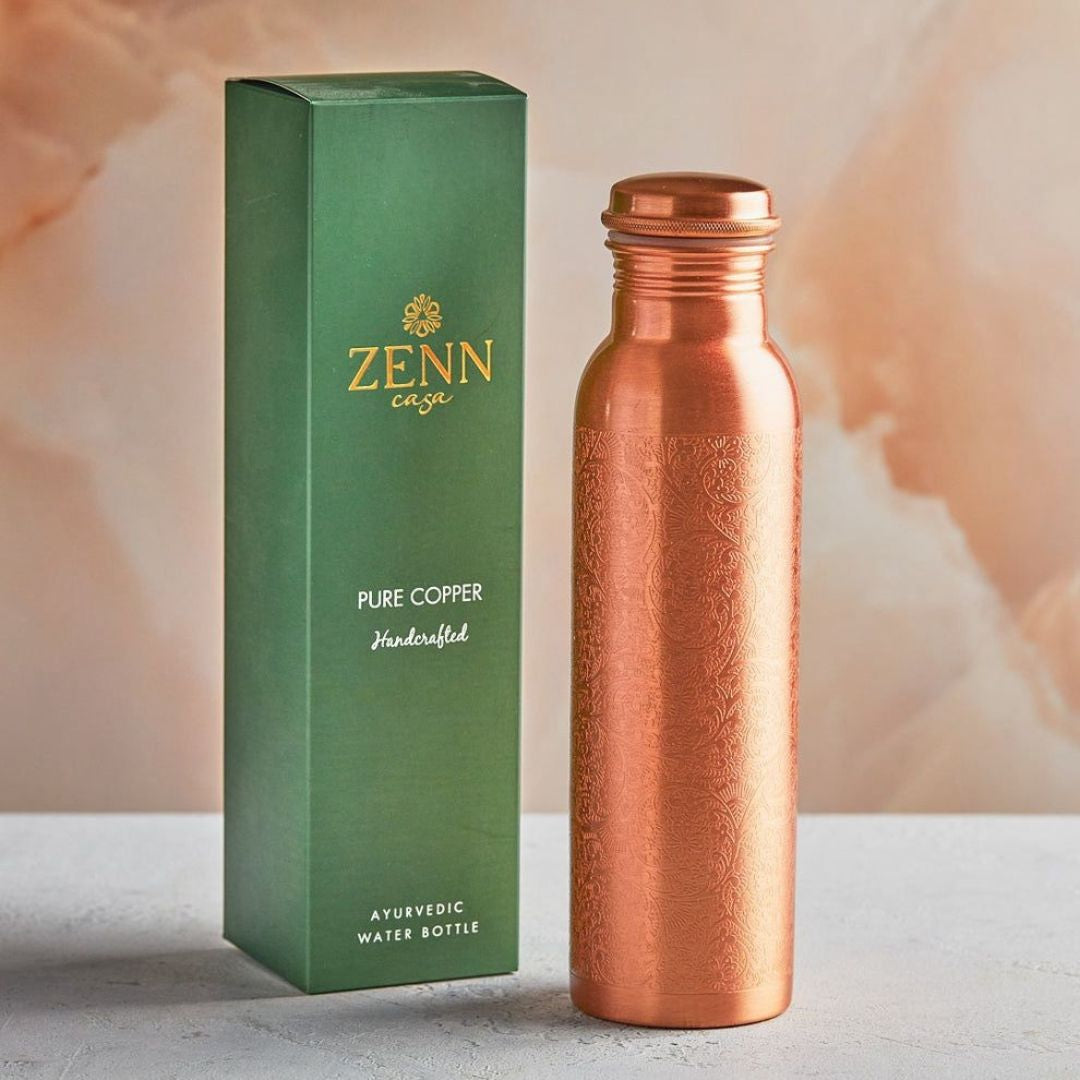
The Premium Embossed Ayurvedic Pure Copper Bottle 900 ML is suitable for storing regular drinking water for 6–8 hours before consumption, as per Ayurveda – to gain maximum benefits from it.
4. Myth: More Copper Water Means More Benefits
Traditional copper-infused water practices should be followed thoughtfully rather than turning them into a "more is better" routine.
As per Ayurveda, storing regular drinking water in a copper vessel overnight and consuming it the following morning is a traditional practice. It is always better to consume the copper-infused water in moderation rather than making absolute claims about how much copper water someone should consume.
The focus should be on moderation and appropriate use. Copper-infused water is traditionally consumed in moderation and should complement, not replace the regular drinking water.
5. Myth: Copper Can Be Cleaned the Same Way Inside and Out
Copper care isn't about making the vessel look brand new after every use. The right cleaning method depends on the surface and finish.
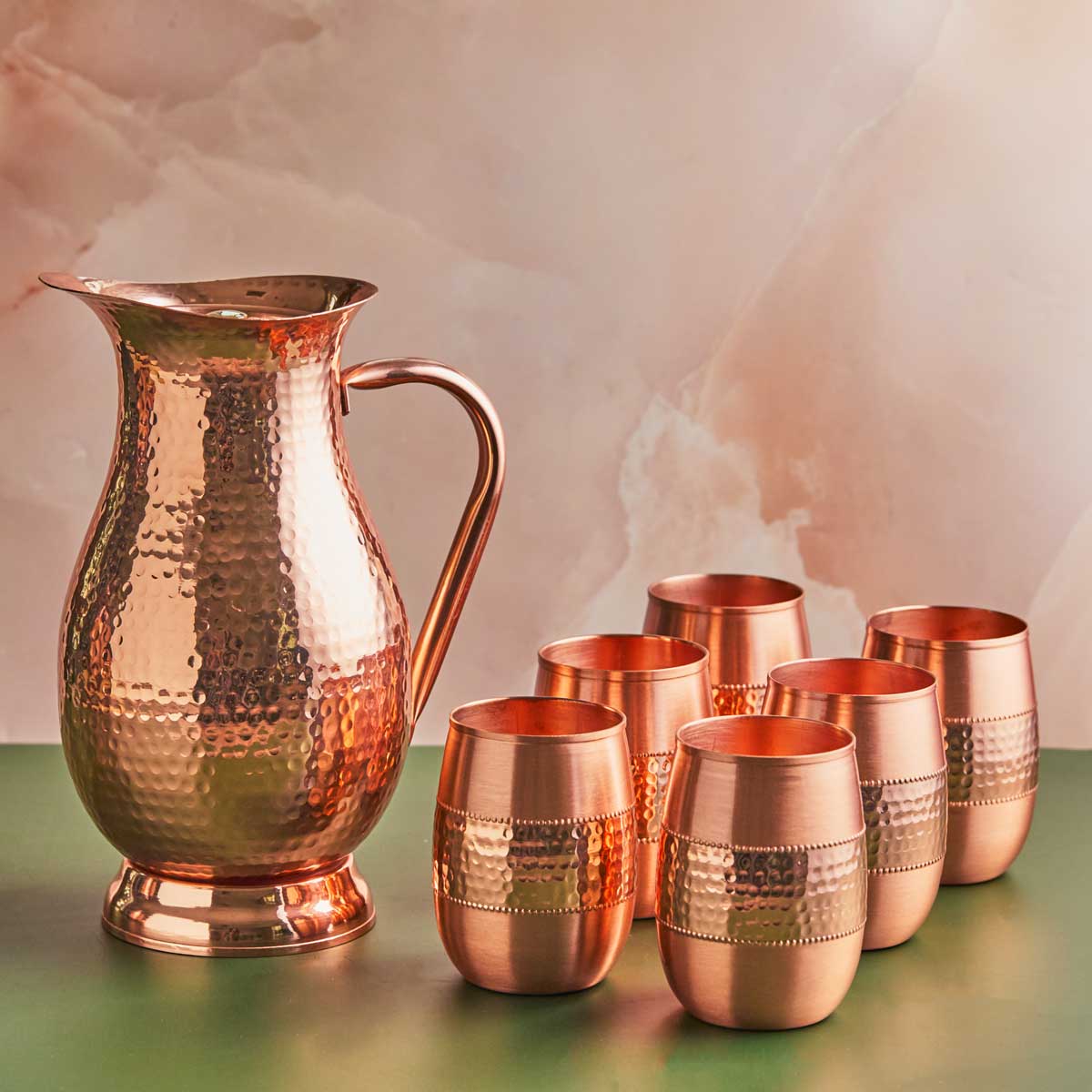
The Royal Mughlai 7-Piece Pure Copper Jug Set 2 L and Ayurvedic Embossed 5-Piece Pure Copper Jug Set 1.5 L feature handcrafted detailing, so their maintenance should be approached with care.
If the exterior has a lacquer or protective coating, avoid aggressive scrubbing that could affect the finish. For uncoated copper vessels, gentle cleaning can help manage natural tarnishing, while deeper cleaning can be done when required by the product's care instructions.
Good copper maintenance isn't about stopping the material from changing—it's about knowing when and how to clean it without compromising its finish .
Use Your Copperware the Right Way
Most copper-care mistakes come from treating copper like an ordinary metal. Natural tarnishing is not automatically a problem; greenish residue should be assessed rather than assumed to be a sign of quality, and hot or acidic liquids should stay out of copper vessels.
At the same time, traditional Ayurvedic practices involving copper-infused water are best approached with moderation and without exaggerated health benefits. Proper cleaning, responsible use, and following product-specific care instructions are essential for maintaining your copperware.
Whether you choose a copper bottle for everyday hydration or a copper jug for serving regular water, understanding the material helps you preserve its appearance, functionality, and craftsmanship for longer.
At Zenn Casa, our handcrafted copper collection brings traditional copperware into modern homes with designs made for both everyday use and thoughtful gifting.
FAQs
Q. Why does my copper bottle develop dark patches?
A copper vessel can develop a black or dark tinge when exposed to air, moisture, and water. This can happen even after the first use and does not necessarily mean the bottle is damaged or unsafe.
Q. Should I use a copper bottle for lemon water or juice?
No. Acidic liquids such as lemon water, juices, soft drinks, and soups should not be stored in a copper vessel. Use the bottle for regular drinking water at room temperature or cold, and avoid warm or hot water and alkaline water.
Q. How long should I store water in copper?
Follow the specific instructions provided with your product. For products that recommend the traditional Ayurvedic practice, regular drinking water can be stored for 6–8 hours before consumption.
Q. Why does copper develop a greenish or bluish residue?
Copperware can react with moisture and environmental elements, sometimes producing green or bluish surface deposits. Unlike ordinary dark tarnishing, unusual residue should be cleaned according to the product’s care instructions rather than treated as a desirable finish.
Q. Does handcrafted copperware need special care?
Handcrafted pieces may feature engraved, embossed, or decorative details that require more careful handling. Avoid abrasive cleaning methods unless specifically recommended, as they can affect intricate detailing or the finish.
